Report from the Metropolitan Museum of Art’s ‘Conferences to Colloquium’ Event
As Chief Marketing Officer at Margaret’s the Couture Cleaner, I’m Katia Graytok, and I’ve dedicated my career to understanding the intricate relationship between textile preservation and cultural heritage. With a background in Textile Design and experience founding an interior design firm specializing in fine textiles and fabrics, I approach conservation from both technical and aesthetic perspectives. In my interior design practice, I believe deeply that a client’s home should reflect their life and travels through their choices of art, textiles, and accessories—each piece telling a story of personal heritage and cultural connection. Observing museum collections from around the world has always been a significant influence on my design practice, both professionally and personally, providing endless inspiration for how textiles can preserve and communicate cultural narratives.
Now, working for Margaret’s, where we specialize in costumes, couture and vintage apparel, textiles, leather accessories, fine rugs, and memorabilia, I find this museum-informed perspective invaluable when advising clients on how to maintain their own collections. Understanding how museums approach preservation helps me guide collectors in caring for pieces that may be equally culturally significant in their personal histories. When the Metropolitan Museum of Art’s Education Department invited professionals to its “Conferences to Colloquium: Sharing Textile Conservation Research” symposium, I knew it was an essential opportunity to deepen my knowledge and strengthen the bridge between institutional conservation practices and private collection care.
The colloquium served as a vital platform for dialogue among professionals and enthusiasts passionate about historic textiles, showcasing recent advances and addressing the practical challenges conservators face daily. From computational image analysis to environmentally sustainable treatment methods, the presentations illuminated the sophisticated intersection of traditional craftsmanship and modern science that defines contemporary textile conservation.
A Professional’s Perspective: Why This Matters to Our Industry
Attending events like this colloquium isn’t just professional development—it’s essential research for those of us who work daily with precious textiles. At Margaret’s the Couture Cleaner, every vintage Chanel jacket, every museum costume, every antique rug that crosses our threshold benefits from the cutting-edge research being shared in forums like this. The Metropolitan Museum’s commitment to open dialogue directly impacts our ability to provide the highest level of care for our clients’ treasured pieces.
Having founded an interior design firm where I specified and designed with fine textiles, I understand intimately how fabric construction, fiber properties, and dye techniques influence both aesthetic choices and preservation challenges. This background allows me to appreciate the technical sophistication of the research presented while recognizing its practical applications in commercial textile care. The colloquium format brilliantly bridges the gap between academic research and industry application.
Groundbreaking Research: Key Presentations
Digital Innovation: Monitoring Deformation of Tapestries
Presenters: Kisook Suh, Conservator, and Dr. Alejandro Schrott, Consultant, Department of Scientific Research
One of the morning’s most compelling presentations explored how computational image analysis is revolutionizing the monitoring of structural changes in historic tapestries. The research team demonstrated how advanced imaging techniques can detect minute deformations in textile substrates that would be invisible to the human eye, providing conservators with unprecedented data about the stability and deterioration patterns of these monumental works.
This methodology represents a significant advance in preventive conservation, allowing institutions to identify at-risk areas before visible damage occurs. From our perspective at Margaret’s, where we regularly assess vintage couture pieces and historical costumes, the principles demonstrated here inform our own documentation practices. While we may not have access to the Met’s sophisticated imaging equipment, understanding deformation patterns helps us identify stress points in garments and develop appropriate storage and handling protocols.
Archaeological Textiles: Dura-Europos Fragments
Presenters: Martina Ferrari, Associate Conservator, and Janina Poskrobko, Conservator in Charge
The investigation of four textile fragments featuring distinctive shaded bands from the ancient site of Dura-Europos offered fascinating insights into both historical textile production and modern analytical methods. These remarkably preserved fragments, dating to the Roman period, provided researchers with rare examples of ancient dyeing and weaving techniques.
The technical analysis revealed sophisticated understanding of color gradation techniques among ancient craftspeople, while also demonstrating the power of modern scientific instrumentation to unlock historical secrets. As someone who has specified fine textiles and worked extensively with luxury fabrics, I was particularly fascinated by the shading techniques employed by these ancient artisans. The presentation emphasized how technical findings directly inform conservation treatment decisions—a principle we apply daily at Margaret’s when working with vintage couture pieces that often feature similarly complex construction techniques.
American Heritage: Sampler Conservation
Presenter: Alexandra Barlow, Associate Conservator
The conservation of American Wing samplers presented unique challenges that exemplify the intersection of cultural history and technical expertise. These educational textiles, created primarily by young women in the 18th and 19th centuries, represent not only individual artistic achievement but also broader patterns in American education and domestic culture.
Barlow’s presentation explored how conservation treatment must balance multiple priorities: preserving the technical integrity of historic stitching, maintaining the legibility of inscribed text and dates, and respecting the pedagogical purpose these objects originally served. This resonated strongly with my experience handling vintage textiles and memorabilia at Margaret’s—we often encounter similar challenges when clients bring us family heirloom textiles, vintage linens, or historic costume pieces that carry both material and emotional significance.
Advanced Imaging: X-radiography Applications
Presenter: Cristina Balloffet Carr, Conservator and Consulting Conservator for the Antonio Ratti Textile Center
The evolution of X-radiography techniques for textile analysis showcased how technological advancement continuously expands conservation possibilities. Balloffet Carr’s presentation traced the development of radiographic imaging from a basic documentation tool to a sophisticated analytical instrument capable of revealing hidden construction details, previous repairs, and structural vulnerabilities.
The presentation emphasized how evolving techniques enable conservators to make more informed treatment decisions while minimizing invasive examinations. For those of us working with couture and vintage apparel, the principles underlying this non-destructive analysis are invaluable. While we may use simpler diagnostic tools, understanding how hidden construction elements affect overall stability helps inform our treatment recommendations for clients with valuable vintage pieces, leather accessories, or fine rugs.
Sustainable Conservation: Green Chemistry Innovations
Presenters: Giulia Chiostrini, Conservator; Kristine Kamiya, Conservator; and Janina Poskrobko, Conservator in Charge
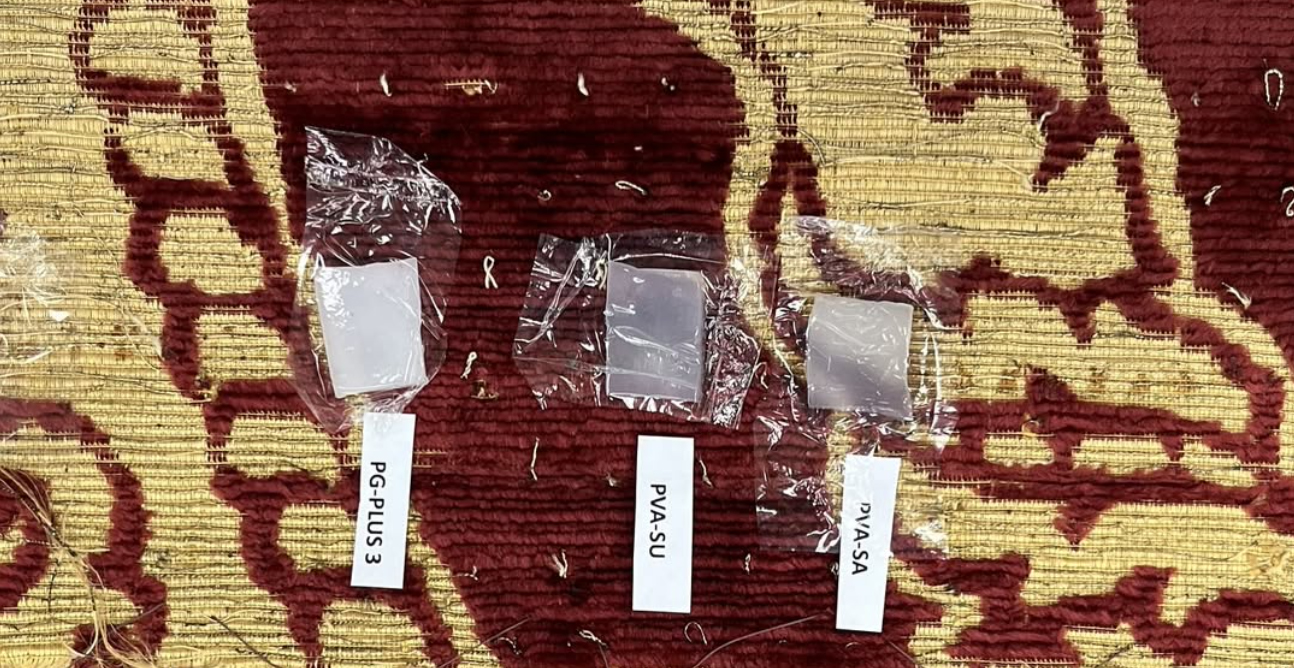
Perhaps the most forward-looking presentation of the day explored the Met’s experimental work with nanogels and environmentally sustainable consolidants for historic textile preservation. This research represents a significant departure from traditional conservation materials, many of which pose environmental and health concerns while potentially creating long-term stability issues for treated objects.
The team’s investigation of green chemistry alternatives demonstrates the field’s growing commitment to sustainable practices that benefit both conservators and collection objects. As a company that handles delicate vintage pieces daily, Margaret’s is always seeking safer, more sustainable treatment options. The research presented here could significantly impact our industry’s future practices, potentially offering alternatives to some of the harsher chemicals traditionally used in textile cleaning and restoration.
Emerging Themes and Future Directions
Several significant themes emerged from the day’s presentations that illuminate the current state and future trajectory of textile conservation research:
- Technology Integration: The seamless integration of digital technologies, from image analysis to advanced radiography, is transforming how conservators understand and monitor textile collections.
- Interdisciplinary Collaboration: Successful conservation research increasingly relies on partnerships between conservators, scientists, historians, and technology specialists.
- Sustainable Practices: Environmental consciousness is driving innovation in conservation materials and methods, reflecting broader societal concerns about sustainability.
- Cultural Sensitivity: Conservation approaches increasingly recognize the cultural dimensions of textile objects, ensuring that treatment decisions respect both material and cultural integrity.
- Commercial Application: Research findings from prestigious institutions like the Met directly inform best practices in commercial textile care, benefiting everyone from private collectors to costume departments.
- Preventive Focus: Advanced monitoring techniques are shifting emphasis from reactive treatment to proactive prevention of deterioration.
The Broader Impact of Shared Knowledge
The Metropolitan Museum’s commitment to sharing conservation research creates tremendous value for specialized businesses like Margaret’s the Couture Cleaner. By presenting findings from international conferences to a local audience, the colloquium creates a ripple effect that strengthens the entire textile care community. We return to our studio equipped with new knowledge, fresh perspectives, and renewed enthusiasm for applying the highest standards to our work with costumes, couture, vintage apparel, and fine textiles.
This model of knowledge dissemination proves particularly valuable for commercial practitioners who may lack resources to attend major international conferences but whose work directly impacts textile preservation in the private sector. The colloquium democratizes access to cutting-edge research while fostering personal connections that often lead to future collaborations between institutions and specialized service providers.
“Conservation is ultimately about time—buying time for objects to survive, creating time for deeper understanding, and investing time in knowledge that will serve future generations.”
Looking Forward: The Future of Textile Conservation
As the colloquium concluded, it became clear that textile conservation stands at a remarkable inflection point. The convergence of advanced analytical capabilities, sustainable treatment options, and growing appreciation for cultural heritage creates unprecedented opportunities for the field. Yet these opportunities also bring responsibilities—to use new technologies thoughtfully, to consistently develop sustainable practices, and to ensure that conservation research serves the broadest possible public benefit.
The conversations that began during the formal presentations continued well into the networking periods, suggesting that the colloquium’s actual value lies not just in information transfer but in community building. The relationships formed and strengthened through such gatherings serve as the foundation for future innovations, collaborative projects, and collective problem-solving.
For those privileged to attend, the Metropolitan Museum’s “Conferences to Colloquium” event provided both practical knowledge and renewed inspiration. For specialized businesses like Margaret’s the Couture Cleaner, it reinforces our commitment to delivering museum-quality care for private clients. The techniques showcased remind us that whether we’re treating a museum’s historic costume or a collector’s vintage Hermès scarf, the underlying principles of respect for cultural heritage and technical excellence remain constant.
As we face an uncertain future for cultural heritage—threatened by climate change, political instability, and economic pressures—events like this colloquium remind us that preservation extends far beyond museum walls. At Margaret’s, we see ourselves as partners in this mission, applying the highest standards of care to the costumes, couture, vintage textiles, leather accessories, fine rugs, and memorabilia that pass through our hands. The textile traditions of the past will continue to inform, inspire, and educate future generations only if we all—museums, institutions, and commercial practitioners alike—remain committed to excellence in preservation.
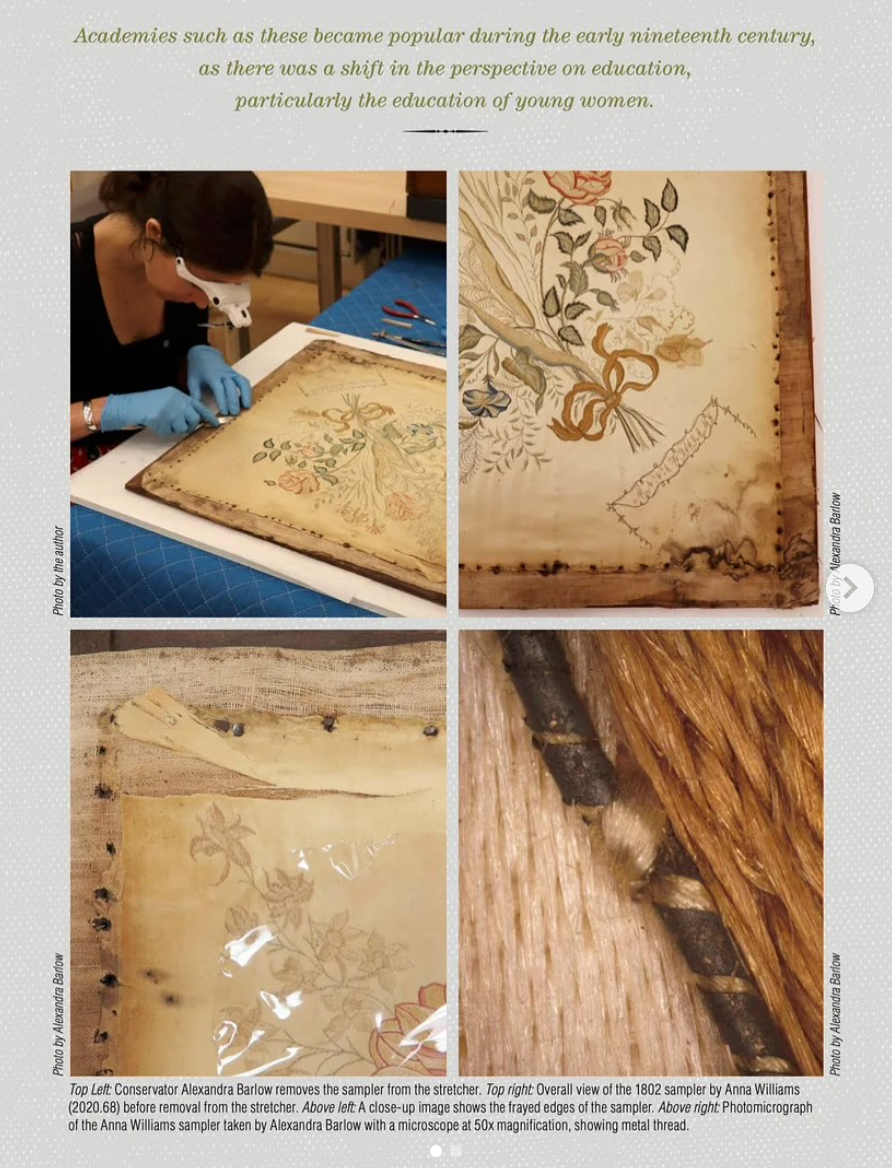
Four Images Show The Preservation Of An 1802 Sampler: A Conservator At Work, The Sampler’s Full View, Frayed Fabric Details, And Embroidery Under A Microscope—all Highlighting Textile Conservation Of Cultural Heritage.
—
About the Author: Katia Graytok is Chief Marketing Officer at Margaret’s the Couture Cleaner, bringing a unique perspective that combines formal education in Textile Design with practical experience founding an interior design firm specializing in fine textiles. Her design philosophy centers on helping clients’ homes reflect their lives and travels through the thoughtful selection of art, fabrics, and accessories. Margaret’s provides specialized care for costumes, couture, and vintage apparel, textiles, leather accessories, fine rugs, and memorabilia, serving museums, cultural institutions, and discerning private clients.